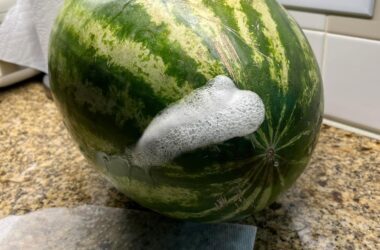
Choosing a good watermelon can feel like a guessing game, but it doesn’t have to be. Recently, we spoke with a watermelon farmer who shared a simple trick for finding the sweetest, juiciest melons. His advice was surprisingly easy: look at the dark green lines. According to him, the stripes on the watermelon should be about two fingers apart. When the stripes are spaced like that, the watermelon is more likely to be ripe and full of flavor. We tested this tip ourselves, and the melon we brought home was delicious. This simple visual clue can make picking a great watermelon much easier.
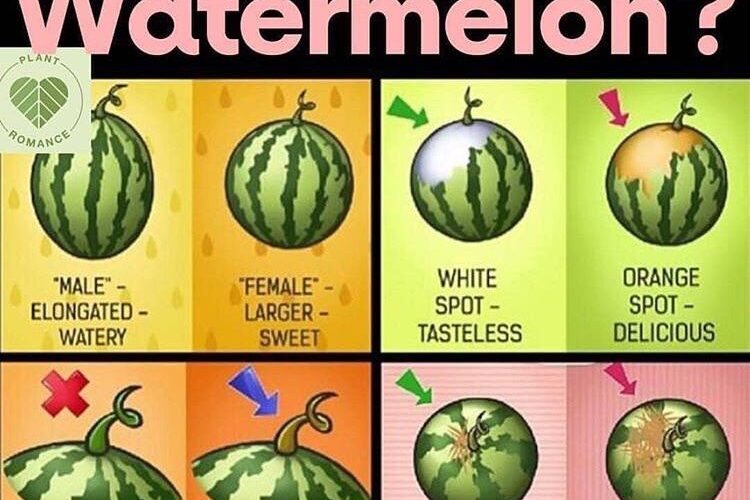
In addition to the farmer’s tip, there are other signs you can look for when choosing a ripe watermelon. Start by checking the field spot, the creamy yellow patch on the bottom of the melon. A deep, rich yellow field spot indicates the watermelon ripened naturally on the vine. A pale or white spot usually means it was picked too early. Also listen for the sound. A ripe watermelon should give a deep, hollow thump when tapped. If the sound is dull or flat, it may not be fully ripe.
Another thing to check is the overall weight. A good watermelon should feel heavy for its size. This indicates that it’s full of juice and properly hydrated. Examine the skin as well. The melon should have a dull, matte finish rather than a shiny surface. A glossy watermelon is often underripe. Look for sugar lines or webbing too. These brown, textured lines are formed when the sugar inside the melon leaks through tiny cracks in the skin. They’re a natural sign of sweetness.
With just a few quick checks, you can dramatically improve your chances of choosing a perfect watermelon. Whether you rely on the farmer’s “two-finger stripe” method or combine it with traditional ripeness signs, these easy tips take the guesswork out of the process. The next time you’re picking out a melon, try these techniques and enjoy a sweeter, more flavorful watermelon every time.